First lady Melania Trump watches as U.S. President Donald Trump signs an executive order in the Rose Garden of the White House on Oct. 19, 2026, in Washington, D.C. (Chip Somodevilla/Getty Images)
First lady Melania Trump announced on Friday that she had secured a localized "temporary" ceasefire between Russia and Ukraine in the Ukrainian city of Oleshky, which will begin Oct. 29.
A statement from the first lady’s office said that the temporary ceasefire in the Russian-occupied city was agreed to by both countries to "allow for humanitarian aid to enter and to prepare a civilian evacuation through a designated safe passageway."
"The situation in Oleshky is dire. Oleshky is a front-line war city on the brink of disaster. Oleshky's remaining population is comprised primarily of elderly residents who urgently need medical attention, medicine, food, and clean water,” the first lady said in a statement, adding that without her intervention, "the possibility to bring humanitarian aid into the city and to evacuate the elderly would be impossible."
Asked about the ceasefire and whether his wife would be part of trilateral peace talks, President Donald Trump said "it's not the worst idea I've ever heard."
"What she wants to do is save children, and that's her focus. And both sides are cooperating with her, so she's doing a very good job," Trump said Friday morning as he departed the White House.
It's unclear exactly how long the ceasefire is set to last in the town where about 1,700-2,000 residents remain of an estimated 24,000 before the war, according to the first lady's office.
The Russian military is currently coordinating the timing of a ceasefire in the Oleshky area, Kremlin spokesman Dmitry Peskov said Friday. Peskov also confirmed that Melania Trump played a coordinating role in reaching a ceasefire agreement in Oleshky.
The General Staff of the Armed Forces of Ukraine said in a social media post on Friday that it will carry out the ceasefire orders.
A temporary ceasefire between Russia and Ukraine also happened in May 2025 during the 80th anniversary commemoration of V Day, which celebrates the victory of the Soviet Union over Nazi Germany in 1945.
This ceasefire comes amid the Trump administration's larger efforts to engage peace talks between Russia and Ukraine, who have been at war since February 2022.
In recent weeks, the president waived a raft of sanctions on Moscow and again blamed Kyiv for the lack of progress in U.S.-sponsored peace talks, even suggesting that Ukrainian President Volodymyr Zelenskyy should be replaced as the nation's leader.
Earlier this week, President Trump told reporters in the Oval Office that the U.S. had received "nothing" for its support of Ukraine.
Melania Trump said in a statement that residents who want to evacuate "to their preferred destination" will receive support from civilian, non-military leaders in both countries.
"I anticipate some will want to go to Russia, and some to Ukraine," she said.
Melania Trump added that she had also gotten assurances that an unnamed "impartial American media organization" will be able to accompany Russian and Ukrainian teams on the ground amid the ceasefire. ABC News has reached out to the White House for additional details.
The first lady’s office said that she became involved in brokering the agreement during a private discussion at her Fostering the Future event at the U.N. General Assembly last month.
Melania Trump has worked to bring awareness to the children impacted by the Russian-Ukraine war as the yearslong conflict drags on. Last year, she said she has an "open channel of communication" Russian President Vladimir Putin on the matter.
The first lady said she had written a letter to Putin stating it was time to protect the children impacted by the war, which was Trump hand-delivered to Putin. The Russian president responded, "signaling a willingness to engage with me directly and outlining details regarding the Ukrainian children residing in Russia," Melania Trump said last year.
Former Transportation Secretary Pete Buttigieg speaks at a rally for New Jersey Democratic Congressional candidate Rebecca Bennett at Raritan Valley Community College on Oct. 16, 2026, in Branchburg, New Jersey. (Kena Betancur/Getty Images)
Pete Buttigieg, the former Transportation Secretary and popular Democratic Party surrogate who has confirmed considering a 2028 presidential bid, is endorsing independent Montana U.S. Senate candidate Seth Bodnar, according to an announcement shared first with ABC News.
"The best leaders I've served with, in uniform and in government, care more about getting the job done than about who gets the credit, and Seth is one of them. Seth and I don't agree on everything, but he has spent his adult life serving this country and the next generation ... and he'll bring that same character to the Senate on behalf of all Montanans," Buttigieg wrote in a statement shared first with ABC News.
It's a notable step by a major Democrat to endorse an independent, but some Democrats feel Bodnar, a former University of Montana president and Green Beret, stands a better chance against Republican Kurt Alme than Democratic candidate Alani Bankhead.
Montana is among a few states this year along with Nebraska, South Dakota, and Idaho where many Democrats are backing independents for Senate.
However, Air Force veteran Bankhead, who won the primary in June has rebuffed pressure to withdraw from the race to clear a path for Bodnar. Bankhead has alleged that people within the Democratic Party tried to get her to drop her bid, a claim the party denies, according to ABC affiliate KWYB.
The matchup has created an additional challenge for those who want to wrest the seat from Republican control, given that the vote among Democrats or those disaffected with Republicans may get split among Bodnar and Bankhead.
"Montana deserves a senator who will fight corruption in Washington, defend reproductive freedom, and work across the aisle to lower costs and actually get things done. Seth Bodnar will be that Senator," Buttigieg, who is a veteran like Bodnar and Bankhead, wrote. He did not mention Bankhead in his statement.
Bodnar, in his own statement, said he was honored to have Buttigieg's support "and proud that people across the political spectrum are joining this campaign."
"Montanans have always voted for the person, not the party, and they want a senator who will put their families, jobs, and public lands ahead of partisan games in Washington. I'll answer to Montana, and I'll work with anyone who's willing to do the same," he said.
The seat is opening up as Republican Sen. Steve Daines is retiring, with Alme, a former U.S. Attorney for Montana, aiming to succeed him. Both parties are paying increased attention to congressional races in Montana, with President Donald Trump having joined Alme and other Republicans for a rally there last week and Vice President JD Vance set to rally in Montana next week.
"I'm ready to step up again to make our lives more affordable, make our communities safer, and protect our Montana way of life," Alme said at the rally last week. "And unlike my liberal opponents, I have the experience to get it done."
Buttigieg, who rose to prominence during his 2020 presidential run, has spent the past two years traveling around the country to stump for Democratic candidates and has endorsed in races up and down the ballot.
While he has confirmed he would consider running for president in 2028, he said he is more focused on the midterms and electing Democrats in 2026.
LeBron James of the Philadelphia 76ers and Miles McBride of the New York Knicks battle for possession on a jump ball during the second quarter of their game, October 20, 2026, in New York City. (Caleb Bowlin/Getty Images)
President Donald Trump attacked Philadelphia 76ers forward LeBron James on Thursday over a video appearing to show the NBA star stretching during the national anthem ahead of his Sixers debut against the New York Knicks on Tuesday.
"While listening to our National Anthem, LeBron James disrespects our Country!" Trump wrote in a social media post alongside a video of James that included overlaid text claiming that James was "working on his golf swing."
"I said right from the beginning that he's no good, a TOTAL DISGRACE. LeBron James should apologize to all of those Great American Warriors and Heroes who died for the American Flag, and all that our Country stands for!" Trump added.
In the video, LeBron can be seen performing arm stretches before moving on to mimic a basketball shooting motion.
Trump has a long history of attacking James going back to his first administration, when the president disparaged the four-time NBA champion's intelligence over an interview he did with CNN.
More recently, Trump speculated in July that James was a "racist" after he signed with the Sixers.
"I think LeBron is, maybe he's a racist, but maybe he doesn't like Trump, I don't know," Trump said in response to a question about if James or Michael Jordan was a better player. "I only like people who like me, so I would say Michael Jordan all the way."
James has yet to comment on Trump's latest remarks. Representatives for James did not immediately respond to ABC News' request for comment on Thursday.
The NBA star has publicly criticized Trump in the past. After Trump rescinded a White House invitation to the Golden State Warriors in 2017, James told reporters: "He doesn't understand how many kids, no matter the race, look up to the president of the United States for guidance, for leadership, for words of encouragement. He doesn't understand that, and that's what makes me more sick than anything."
James later told reporters, "This is a beautiful country and we're never going to let one person dictate how beautiful and how powerful we are."
James scored 14 points for the 76ers in their 106-100 victory over the Knicks, the defending NBA champions, in the opener Tuesday at Madison Square Garden.
The four-time NBA champion will make his home debut for Philadelphia against his former team, the Cleveland Cavaliers, on Thursday night.
With the Trump administration signaling that work on the triumphal arch near Arlington National Cemetery could begin two weeks from Thursday, opponents of the project urged a federal judge to issue an order blocking the construction unless it is authorized by lawmakers.
The request for a preliminary injunction comes a day after the Justice Department filed notice with a federal judge indicating that construction on the arch could begin on Nov. 5, immediately after the National Capital Planning Commission is set to grant its final approval of the project.
Judge Tanya Chutkan had previously ordered that the government must give at least 14 days' notice before starting work on the arch. Wednesday's notice would keep with that timeframe.
The Vietnam-era veterans who have brought a lawsuit against the arch asked Chutkan to step in so that the administration can't "render the arch a fait accompli before this Court has made a final determination whether Defendants' project is unlawful."
The veterans' filing accuses the administration of having "barreled ahead, doing site testing, drawing architectural plans, and seeking approvals from commissions populated by friends of the administration."
All the while, the filing says, the Trump administration has "failed to obtain (or even to seek) approval from the one body that, by law, must authorize the project: Congress."
The administration argues that the bill signed by President Calvin Coolidge in 1925 providing for the construction of Memorial Bridge also authorizes the arch, because the initial plan called for columns at the end of the bridge.
Opponents describe the administration's argument as "entirely untethered" from the text of that 1925 law.
Trump's proposal would put the 250-foot arch in a traffic circle across the Potomac River from the Lincoln Memorial at the foot of the national cemetery. It currently faces legal challenges by the veterans and preservationists.
The administration acknowledged in September that the arch would cause "adverse effects" on the setting and views along the rive, but those impacts "cannot be fully avoided" because the arch's location is "central to the undertaking."
Iowa Republican Senate candidate Rep. Ashley Hinson speaks with Jonathan Karl of ABC News. (ABC News)
Iowa Republican Senate candidate Rep. Ashley Hinson on Thursday strongly condemned Republican Ohio gubernatorial candidate Vivek Ramaswamy for his controversial campaign ad featuring the estranged mother of Democratic opponent Amy Acton.
Hours before he was to appear at a rally with Hinson on Thursday, President Donald Trump defended the ad, in which Acton's mother, Donna Arthur, says her daughter has lied about her past and her struggles growing up.
Acton has spoken openly about her tumultuous relationship with her mother, whom she says she has not spoken to since she was 12 years old. Acton alleged her mother's second husband molested her between the ages of 9 and 12.
In an exclusive interview with ABC News' Jonathan Karl for ABC News' "This Week" to air Sunday, Hinson blasted the decision to release the ad.
"It's terrible. I think about it as a mom and you think about your kids surviving childhood sexual abuse and having to relive that trauma on TV again. I think it's absolutely terrible, and I think they should take the ad down," Hinson told Karl during an interview on Thursday from Iowa.
Hinson also had harsh words for Vice President JD Vance, who defended Ramaswamy on Wednesday and said he was "disgusted" seeing Republicans across the country "whining" about the ad.
"It's ridiculous. It's absolutely the wrong tone," Hinson told Karl about Vance's comments. "It sends absolutely the wrong message."
"Iowans want -- and probably Ohioans want -- someone who's going to be an empathetic leader, and I think it sends absolutely the wrong message," Hinson said.
"And I would bet that Amy Acton and I probably don't agree on anything, either. But like the last thing I would want as someone who's running against is to force them to relive the childhood trauma. So, I think, again, I think it's wrong, and it should come down," Hinson added.
Hinson is one of the most high-profile Republican women running for office this year. Hinson, who is 43, would become the youngest female Republican senator in the U.S. Senate if she wins in November.
Trump, who endorsed Hinson before Iowa's GOP primary, defended Ramaswamy's ad in a post on his social media platform earlier Thursday and said Ramaswamy "should keep it up."
"Who wouldn't use such an Ad? I would, it's called, 'hitting paydirt,'" Trump posted. "Frankly, anybody whose mother spoke about a daughter in that way would normally lead to the daughter being precluded from serving in Office, let alone the Office of Governor."
Hinson is set to appear alongside Trump during a campaign rally in Sioux City, Iowa, on Thursday evening, the first of two final midterm rallies he is holding in the Hawkeye State. The president is visiting the red state to boost GOP candidates down the ballot.
Leaving the White House for Iowa Thursday afternoon, Trump was asked about Hinson's comments in the interview with Karl.
"That's her opinion," Trump said, adding, "This is a mother saying very bad things about her daughter, and I don't know why that should be shielded. The only problem is the press has decided to unify and act like it's a horrible thing. It's horrible for her."
Trump also criticized Ohio Gov. Mike DeWine in his post, who had called the ad "deeply, deeply troubling" and called for Ramaswamy to take it down.
Trump, in his post, said DeWine "probably wants a Dumocrat to win, and certainly doesn't want someone who will do a much better job than he is capable of doing."
The ad, which circulated on social media late Monday, shows Acton's long-estranged mother, Donna Arthur, saying that she loves her daughter but that "Amy has a serious problem" and has lied about her past and her struggles growing up. The ad came two weeks out from the high-stakes midterm elections, where Ohio will not only elect a new governor but also vote in Senate and House races that could determine the balance of power in the next Congress.
At a campaign event on Wednesday, Acton called the ad "horrible and hideous."
Acton has been public about her experience with abuse and has spoken about her tumultuous relationship with her mother, whom she says she has not spoken to since she was 12 years old. Acton alleged her mother's second husband molested her between the ages of 9 and 12. Charges were filed against her stepfather and Acton testified against him.
Trump won Iowa's last three presidential elections, but his approval ratings have sunk as voters grow weary over rising grocery and fuel prices.
Corey Lewandowski, American political operative and former campaign manager for Donald Trump, is seen during the CPAC Poland 2025 conference. (Sopa Images/SOPA Images/LightRocket via Getty Images)
Justice Department prosecutors are investigating the Department of Homeland Security's contracting activities in the first year of the second Trump administration and scrutinizing Corey Lewandowski, a longtime Trump ally who served as ousted DHS Secretary Kristi Noem's top aide, two sources familiar with the matter confirmed to ABC News.
The investigation is in its early stages, sources said, and followed a referral to the department regarding Lewandowski's conduct from DHS Inspector General Joseph Cuffari.
"Mr. Lewandowski has not been contacted by the Justice Department regarding any investigation, and he denies any wrongdoing when he was proudly serving his country in a voluntary capacity," said Adam Trigg, an attorney for Lewandowski in a statement provided to ABC News.
A Justice Department spokesperson declined to comment.
The probe marks a rare instance of Trump's Justice Department examining conduct of an ally of the president.
When asked by reporters Thursday about the probe into Lewandowski, President Donald Trump said he did not know about the specifics of the investigation.
"All I know is I want my people to be honest," Trump said. "And if they're not gonna be honest they have to be prosecuted. I don't know about specifically, but -- because I view if people are not honest they're stealing from me."
Lewandowski served as a special government employee during Noem's tenure effectively acting as her chief of staff as the department came under scrutiny for its controversial spending practices through costly government contracts.
Noem and Lewandowski were ousted in March following a congressional hearing where Noem claimed President Trump knew of her decision to launch a $220 million digital ad campaign for the department with videos that featured her prominently.
Both have repeatedly denied any wrongdoing. The Wall Street Journal first reported on the DOJ's probe of Lewandowski.
U.S. President Donald Trump holds a press conference with Israeli Prime Minister Benjamin Netanyahu on Dec. 29, 2025, in Palm Beach, Florida. (Joe Raedle/Getty Images)
The Israeli Defense Forces and the United States military have drawn up plans to renew joint strikes on Iran in the coming weeks, according to two Israeli sources familiar with the plans.
The Israeli sources said the strikes would almost certainly take place after the U.S. midterm elections, citing President Donald Trump’s reluctance to further destabilize oil markets in the final days of the campaign.
The White House said Thursday that the U.S. will not resume attacks on Iran before the Nov. 3 midterm elections.
“The United States will not be attacking Iran at any time prior to the midterm elections,” White House spokesperson Anna Kelly said in a statement to ABC News.
"Hunting season is open as soon as the elections end and it's obvious that they're not going to wait long," one Israeli source said.
The New York Times was first to report on the planning.
Asked about the Times' reporting, a White House official said the administration does not comment on "sensitive military plans that may or may not exist."
The official added that Trump "keeps all options on the table" to prevent Iran from acquiring a nuclear weapon.
The Pentagon declined to comment.
Israeli Prime Minister Benjamin Netanyahu is firmly in favor of renewed action against Iran, but both sources said the decision for joint strikes to resume is "only for Trump to decide."
One Israeli source did not rule out Israel striking unilaterally should the U.S. choose not to participate, but added Israel would still require U.S. consent.
Trump has repeatedly said that he would restart the war after the midterm elections and has threatened to "end" it after the midterms.
He gave a somewhat conflicting answer on the status of negotiations with Iran when asked Wednesday night, initially saying talks are ongoing "a little bit," but moments later saying "I think we're not negotiating."
"A little bit, but we'll see what happens," Trump said, when asked for an update on negotiations.
Asked if he is "over" negotiating with Iran, Trump responded, "No, I think we're not negotiating with -- We are going to have something one way or the other that'll happen fairly soon."
"Most people seem to think it's after the election, and we're going to see what happens," he added.
The plans to renew joint strikes were discussed during Defense Secretary Pete Hegseth's unannounced visit to Israel earlier this week, according to one Israeli source, who added that new intelligence was shared between both sides.
New strikes would aim to further erode Iran's economy and build on the ongoing U.S. blockade, with targets to include petrochemical facilities crucial to Iran's oil industry, one of the sources said.
The source added that striking Iranian nuclear facilities, such as those at Pickaxe Mountain, is also part of the new plans, but added there are no plans to strike civilian infrastructure like power plants.
The source emphasized that regime change in Iran, and not a negotiated deal, is the Israeli government's top goal.
"The only question is the timing," they said.
The U.S. military has been repositioning personnel at U.S. military bases in the Middle East, a source familiar with the matter told ABC News.
The repositioning of forces is similar to what occurred quietly prior to the start of the war with Iran in February, according to the source.
Asked for comment on an NBC report about the reduction of military and diplomatic personnel in the region, CENTCOM spokesman Capt. Tim Hawkins said in a statement: "We regularly move U.S. service members and assets to optimize mission readiness. We do not discuss related movements for operational security reasons. U.S. forces remain vigilant and ready to protect American personnel and interests across the region."
Earlier Wednesday, the State Department ordered the departure of non-essential personnel and family members in Saudi Arabia -- a decision officials say is a direct response to the risk posed by Iranian-backed Houthi militants, who have attacked Saudi oil infrastructure and airports on Saudi Arabia from Yemen.
There have been much smaller posture adjustments at several other embassies in the Middle East -- changes officials say are also linked to the Houthi threat and other matters not connected to any plan to resume combat against Iran.
ABC News' Nick Kerr and Emily Chang contributed to this report.
Mike DeWine, governor of Ohio, speaks during an event at Cleveland Cliffs Middletown Works in Middletown, Ohio, Aug. 21, 2026. (Brian Kaiser/Bloomberg via Getty Images)
Republican Ohio Gov. Mike DeWine on Thursday condemned a controversial ad from GOP gubernatorial candidate Vivek Ramaswamy featuring his Democratic opponent Amy Acton's estranged mother calling her daughter a "liar."
DeWine told reporters in Columbus, Ohio, that the ad is "deeply, deeply troubling" and that the Ramaswamy campaign "needs to take it down," according to audio provided by Cleveland ABC affiliate WEWS.
"It's wrong to run this ad," DeWine said, adding that even though the midterms are fast approaching, he "would urge Ramaswamy's campaign to take this down."
The ad, which circulated on social media late Monday, shows Acton's long-estranged mother, Donna Arthur, saying that her daughter has lied about her past and her struggles growing up.
Acton has been public about her experience with abuse and openly spoken about her tumultuous relationship with her mother, whom she says she has not spoken to since she was 12 years old. Acton alleged her mother's second husband molested her between the ages of 9 and 12. Charges were filed against her stepfather, and Acton testified against him. He pleaded not guilty, but fled the state before trial and never appeared before a judge. He died in 2004.
Ramaswamy, on Tuesday, confirmed his campaign had made the ad, which has drawn bipartisan backlash for bringing up his opponent's childhood trauma.
Acton has criticized the ad, calling it "horrible and hideous" during a campaign event on Wednesday, adding that the ad is "despicable" and "an exploitative thing to do."
DeWine invoked his own past as a prosecutor of several rape cases, saying "I think we all have an obligation to speak out for the victims."
"It's one of the reasons I'm doing this today. We need to speak out. We need to send the message to children that we are here to protect them and that there are people who will in fact protect them, and we just have to make sure we always try to do that," DeWine said.
The ad came nearly two weeks out from the high-stakes midterm elections where Ohio is home to not only a gubernatorial race, but also key Senate and House races that could determine the balance of power in Congress.
DeWine had endorsed Ramaswamy for governor -- and indicated he would still back Ramaswamy and the whole Republican ticket in the state, according to WEWS.
"Today is about the ad. But ... I'm not changing my endorsement," DeWine responded to a question about his support for Ramaswamy.
DeWine joins several other Republicans in the state who have recently spoken out against the controversial ad.
Former Ohio Rep. Jim Renacci -- who also ran for Senate in 2018 and governor in 2022 -- on Thursday called on Ramaswamy to "pivot quickly" away from the attack ad.
Ohio Sen. Jon Husted, who is running for reelection for the seat, said on Wednesday, "I would not have run that ad."
Ohio Republican Secretary of State Frank LaRose told ABC Affiliate WSYX earlier this week that his office is reviewing complaints about the Ramaswamy ad to see if it violated any state laws after he said he has received "complaints from various people." He later added, "I will say that, you know, candidates will answer for their own ads, that, you know, I probably wouldn't run an ad like that, but every candidate gets to make their own decision."
Vice President JD Vance defended Ramaswamy's use of the ad during a campaign event in Ohio on Wednesday.
"Vivek Ramaswamy had the audacity to run a TV commercial which calls it out like it is and calls Amy Acton a liar," Vance said.
DeWine, who was Acton's boss when she was head of the Ohio Department of Health, said he knew her to be truthful.
"My experience with her and working closely with her every single day was she certainly told the truth," he said.
ABC News' Benjamin Siegel contributed to this report.
A coalition of Democrats is suing to prevent the Trump administration from allegedly imposing itself on state-run elections and threatening to prosecute local election officials, setting up yet another legal showdown less than two weeks before Election Day.
The Democratic National Committee, its congressional and Senate campaign arms, a handful of high-profile lawmakers and others filed the suit late Tuesday in Washington, D.C., federal court.
Their complaint asks a federal judge to block the Trump administration’s alleged attempts to force states to remove voters from registration lists, segregate certain ballots and "threaten state and local election officials for doing nothing more than their lawful duties.”
ABC News has reached out to the White House for comment.
The Justice Department has repeatedly defended its actions as part of an effort to ensure the integrity of the election system.
The Trump administration has tangled with officials in California, Nevada and other states over allegations of noncitizen voting in recent weeks. The Justice Department and Department of Homeland Security have accused several states of knowingly harboring noncitizens on their voter rolls and refusing to collaborate to remove them.
In court papers filed Tuesday, two officials in the Los Angeles County registrar's office delivered the results of their "preliminary analysis" of 200 individuals from the DOJ's list of some 20,000 accused of being ineligible to vote.
Of those 200 individuals, officials said, nearly 40% "indicate that they were born in the United States, which is strong evidence of citizenship; and 71.2% of the records have no voting history."
In a statement to ABC News on Tuesday, DOJ spokesperson Kiersten Pels accused California of "willful blindness."
"California cannot facilitate the violation of federal law," Pels said. "We notified California that noncitizens are likely registered to vote, and we asked the state to independently verify the citizenship of any ballots cast by people on a list that we provided. It refused to do so. Federal law doesn't permit this willful blindness."
States claim the administration's steps -- taken just weeks before the midterms -- reflect federal overreach and are meant to sow distrust in the outcome of the election.
The Democrats' suit slams the administration for pressuring states to purge their voter registration lists of illegal voters using "shoddily compiled lists of supposed noncitizens—target lists that have crumbled upon the barest inspection.”
“For over a decade now, President Donald J. Trump has bombarded the American people with lies and misinformation about American elections and voter fraud,” the suit says. “While these lies have been debunked at every turn, that has never deterred the President from employing them as a pretext to seize control over elections, even as courts overwhelmingly reject that effort.”
Agriculture Secretary Brooke Rollins, Sen. Jon Husted, Rep. Warren Davidson, Ohio Republican gubernatorial candidate Vivek Ramaswamy and Ohio State Sen. Rob McColley attend a campaign rally with Vice President JD Vance at the Sharonville Convention Center on October 21, 2026 in Sharonville, Ohio. (Jacquelyn Martin/Pool/Getty Images)
Vice President JD Vance, during a rally in Cincinnati on Wednesday, praised Ohio Republican gubernatorial candidate Vivek Ramaswamy for having the "audacity" to cut a controversial ad featuring his Democratic opponent Amy Acton's estranged mother calling her daughter a "liar" -- a move that has sparked bipartisan backlash.
"Vivek Ramaswamy had the audacity to run a TV commercial which calls it out like it is and calls Amy Acton a liar," Vance said.
The ad, which circulated on social media late Monday, shows Acton's long-estranged mother, Donna Arthur, saying that she loves her daughter but that "Amy has a serious problem" and has lied about her past and her struggles growing up. The ad came nearly two weeks out from the high-stakes midterm elections where Ohio is home to not only a gubernatorial race, but also key Senate and House races that could determine the balance of power in Congress.
At a campaign event in Wyandot County on Wednesday, Acton called the ad "horrible and hideous."
“I think it was a horrible and hideous thing to do, a sad thing, and I feel like it was an exploitative thing to do," she said. "I think it's despicable, but it's exactly like he has been this entire campaign."
Ramaswamy, on Tuesday, confirmed his campaign had made the ad and said he wanted the race to be about "substantive issues," but that Acton had ducked accountability, debates and what he claimed were her own lies about him. Acton and other Democrats, as well as some Republicans, have excoriated Ramaswamy for the ad and for bringing up his opponent's childhood trauma.
Acton has been public about her experience with abuse and openly spoken about her tumultuous relationship with her mother, whom she says she has not spoken to since she was 12 years old. Acton alleged her mother's second husband molested her between the ages of 9 and 12. Charges were filed against her stepfather, and Acton testified against him.
Acton's campaign responded to the ad with one of its own in which her brother, Philip Stearns, criticized Ramaswamy for the ad and noted she had been the victim of abuse.
"Shame on Vivek,” Stearns said in the ad, adding, "It's the contempt he has for Amy. It's the contempt he has for Ohio. He's not fit to lead."
Acton's campaign released a statement on Tuesday from Stearns as well saying Ramaswamy "has stooped to such a despicable low as to attempt to turn the sexual abuse Amy endured at twelve years old from our birth mother's husband into a political talking point."
ABC News White House Correspondent Karen Travers asked President Donald Trump about the ad on Wednesday. The president said he knew "nothing about it," later adding that "it's a very unusual situation to have a mother hate a daughter that much, but I don't think that has anything to do with Vivek."
The vice president said he "wasn't even supposed to talk about" the ad -- which he called the "biggest controversy" -- but couldn't "help myself."
Vance said Wednesday that voters should "focus on the substance" rather than the controversy, turning to attack Acton over her role as Ohio’s health director during COVID.
"And my message, ladies and gentlemen, is very simple: Whether -- whatever you think about any of the TV advertisements, focus on the substance and focus on the facts. And the fact is that Amy Acton was the woman who tried to mask your children."
Vance later said Acton "could never" be governor because she is "worried about whether somebody says something mean about" her.
"I think that a person who is more worried about whether somebody says something mean about them, that person -- that person could never serve in the governor's mansion of the great state of Ohio," Vance said.
ABC News has reached out to Acton's campaign for comment on Vance's comments.
Speaking ahead of Vance on Wednesday, Ramaswamy made no reference to the controversial ad. During his remarks, Ramaswamy did not mention Acton's name or even reference his opponent at all -- a contrast from how he often mentions her on the trail.
Sen. Jon Husted, who is in a toss-up race for reelection in the state, told the Associated Press after Wednesday's rally, " I would not have run that ad."
Incoming Kissimmee Mayor Jackie Espinosa sits in Matador Tacos & Tapas Bar, which she owns, in Kissimmee, Fla., in 2023. (Willie J. Allen Jr./Orlando Sentinel/Tribune News Service via Getty Images)
A Florida mayor was arrested Wednesday on theft and fraud charges alleging that she illegally enriched herself and family members through a COVID-19 small business relief program launched under her administration, according to the state's attorney general.
Kissimmee Mayor Jackie Espinosa is being charged with grand theft, a second-degree felony, and organized scheme to defraud, a first-degree felony, according to Florida Attorney General James Uthmeier.
Espinosa is accused of improperly appropriating $50,000 in funds through the city's Business Boost 2.0 program, according to the arrest warrant.
"This is the local government equivalent of insider congressional stock trading," Florida's chief financial officer, Blaise Ingoglia, said during a press briefing on Wednesday.
An audit of COVID-19-related grant programs by Ingoglia's office found that three businesses owned or controlled by Espinosa or members of her immediate family allegedly received $50,000 in grant funds through Kissimmee's Business Boost 2.0 program, according to the warrant. The businesses include a dance production studio, a diner and a real estate company, according to the warrant. She and her family members allegedly applied for the grants on the day applications opened in September 2025, according to the state attorney general's office.
"The evidence makes very clear that there was intent to engage in this conflict of interest that ultimately abused her office to enrich herself," Uthmeier said. "Mayor Espinosa demonstrated an intent to create, streamline and simplify, reduce oversight of and more easily enable a process whereby herself and immediate family could apply for and receive city funds to which she was not entitled."
Espinosa's attorney said the mayor "maintains her innocence" and that they plan to challenge the allegations "vigorously in court."
"This case involves a publicly approved grant program administered by City staff, not a secret scheme to steal taxpayer money," her attorney, Migdalia Perez, said in a statement to ABC News.
"The prosecution must establish that the mayor acted with criminal intent. We firmly maintain that she did not," Perez said. "There is a fundamental difference between an alleged ethics violation and a criminal offense. The State cannot transform one into the other without proving every element of a crime beyond a reasonable doubt."
Espinosa, 58, was booked Wednesday morning into the Osceola County Jail under her full name, Eva Jacqulyn Espinosa, online jail records show.
She faces up to 30 years in prison if convicted as charged, officials said.
Espinosa has served as the mayor of Kissimmee since November 2024. Her term ends in 2028.
An aerial view of the 5C Data Centers CMH01, Oct. 18, 2026, in Springfield, Ohio. (Michael M. Santiago/Getty Images)
A majority of Americans say artificial intelligence is a bad thing for society and about two-thirds oppose the construction of new data centers in the U.S., with opposition even higher to building data centers in people's own communities, according to an ABC News/Washington Post/Ipsos poll conducted using Ipsos’ KnowledgePanel.
The poll finds that a 57% majority of Americans say AI is bad for society while 42% say it is good for society. Just 2% say it is "extremely" good for society while 17% say it is extremely bad for society.
Younger Americans are more likely to say AI is bad for society than older Americans: 65% of Americans under 30 say AI is bad for society along with 59% of those 30 to 39. A slimmer majority of Americans 40 and older say AI is bad for society (53%).
Majorities of Democrats (63%) and independents (58%) say AI is bad for society, while Republicans are more evenly split with 51% saying AI is good for society and 47% saying it is bad for society.
Still, Americans are more likely to say AI is good for them personally: 50% say AI is good for them and 49% say it is bad for them. Again, intensity lies with the pessimists. Five times as many people say it is extremely bad for them (15%) compared to extremely good (3%).
A majority of Republicans (57%) say AI is personally good for them while a similar majority of Democrats say it’s personally bad for them (55%). Independents are split on whether AI is good (50%) or bad (49%) for them personally.
Risks and benefits of AI
When Americans were asked about various potential risks with the growth of AI, majorities say that most of the possible consequences are a "high risk."
Nearly three-quarters of Americans, 73%, say there is a high risk of AI hacking secure computer systems, including majorities across partisan groups and age groups.
About two-thirds of Americans, 65%, say there is a high risk of the growth of AI leading to the elimination of many jobs, including majorities across age, partisan and income groups.
About 6 in 10 Americans, 62%, say there is a high risk of people losing the ability to make their own decisions without AI, including a larger majority of Americans under the age of 50 (67%). Majorities across partisan groups say there’s a high risk of people losing the ability to make their own decisions without AI: 68% of Democrats, 63% of independents and 55% of Republicans.
More than half of Americans, 54%, say there is a high risk of increasing economic inequality due to the growth of AI, including most Democrats (66%) and independents (57%) and just over a third of Republicans (36%). Similar majorities across income levels say there’s a high risk of increased economic inequality with the growth of AI.
One-third of Americans, 33%, say there is a high risk of human extinction due to the growth of AI -- a smaller share than the other risks, but for the most dire of consequences. Democrats are more likely to say that the growth of AI will lead to a high risk of human extinction (40%) than Republicans (24%), with independents falling in between (34%).
When it comes to the potential benefits of AI, smaller shares of Americans say there's a big chance of each happening -- although roughly the same share say there's a big chance of AI making everyday tasks easier as say that there is a high risk of human extinction due to AI.
About one-third of Americans, 34%, say that the growth of AI has a big chance of making everyday tasks easier. That includes a larger share of Republicans (42%) than independents (33%) or Democrats (29%).
Three in 10 Americans (30%) say that the growth of AI has a big chance of leading to U.S. dominance in AI technology, including more Republicans (41%) than independents (27%) or Democrats (25%).
Just 2 in 10 Americans (20%) say that the growth of AI has a big chance of making people more productive, including relatively small minorities across demographic groups; nearly twice as many say there is "little or no chance" of AI making people more productive (38%).
And even fewer, 13% of Americans, say that the growth of AI has a big chance of creating many new jobs -- just over half, 52%, say it has little or no chance of creating many new jobs. More Republicans (17%) than Democrats (9%) say that AI has a big chance of creating many new jobs, but even the share of Republicans saying this is quite small. Most Democrats (60%) and independents (54%) along with 42% of Republicans say AI has little or no chance of creating many new jobs.
Regulation and the administration
Two-thirds of Americans say the federal government is not doing enough to regulate the growth and development of AI technology, including majorities of Democrats (80%), independents (66%) and Republicans (54%).
Just 22% of Americans say the government is doing "about the right amount" to regulate AI.
Two-thirds of Americans disapprove of how Trump is handling AI; just 30% approve. Approval peaks among MAGA Republicans -- who make up about 6 in 10 Republicans -- 80% of whom approve. But approval falls to 49% among non-MAGA Republicans, 50% of whom disapprove. Wide majorities of Democrats (92%) and independents (75%) disapprove of how Trump is handling AI.
Americans trust Democrats over Republicans to handle AI, 26% to 19%, but about half say they don’t trust either party to handle AI (49%). In April, Americans were roughly split over trusting Democrats or Republicans more, with still about half saying they didn’t trust either party.
Building data centers
Two-thirds of Americans (66%) oppose the construction of new data centers in the U.S., growing to 72% when asked about building a new data center in their community.
Data centers are a key issue ahead of high-stakes midterm elections. Trump has stressed his strong support for them, saying they can help enrich communities and assist in the United States’ effort to defeat China in the global AI race.
Majorities across partisan groups and virtually all other major demographic groups oppose a new data center in their community. That includes 81% of Democrats, 76% of independents and 58% of Republicans, along with 80% of adults under 30 and 69% of those 65 or older.
Opposition is slightly higher in rural communities (78%), but 72% of suburbanites agree, along with 69% of urbanites, who are much less likely to face data center construction in their own backyards.
All in all, there’s also not much support for building more data centers nationally: Just 30% support them, peaking at 53% support among MAGA Republicans.
Methodology: This ABC News/Washington Post/Ipsos poll was conducted via the probability-based Ipsos KnowledgePanel Oct. 9-13, 2026, among 2,545 U.S. adults with an error margin of +/- 2 points overall. Several questions were asked of a half sample of 1,271-1,274 adults with an error margin of +/- 2.8 points. Other subgroups also have larger error margins.
ABC News’ Liz Schreier contributed to this report.
In this July 28, 2026, file photo, a U.S. Secret Service Uniformed Division officer patrols outside the perimeter of the White House in Washington, D.C. (Kevin Carter/Getty Images, FILE)
In 2017, a man opened fire on his estranged wife, a special needs teacher at an elementary school in San Bernardino, California, killing her and a student before taking his own life.
The man who carried out the attack had a history of domestic violence, according to the U.S. Secret Service, which in a first-of-its-kind report is detailing common "behaviors of concern" it says are often exhibited before attackers carry out violence.
Nearly three-quarters of those who carried out workplace attacks exhibited such behaviors of concern, according to the report released on Wednesday.
In addition to its protection and financial crime duties, the U.S. Secret Service also houses the National Threat Assessment Center (NTAC), which examines targeted violence and publishes research papers on the topic.
Lina Alathari, who has a Ph. D. in cognitive neuropsychology and leads the center, told ABC News in an interview the report studied incidents from 2016 to 2020. It's also based on interviews with workplaces that practice the training the Secret Service recommends.
"One of the main findings from our report examining mass attacks was that over 40% of the attackers had a history of domestic violence, and when you parse out these 50 subset of workplace attackers, that number goes up to 53%," Alathari said adding that the incidents continue to happen on a "monthly or weekly basis."
Alathari told ABC News the warning signs of the attacks fell on a "continuum."
According to the report: "Some attackers engaged in violence directed at romantic partners or relatives, prompting victims to seek protective orders or restraining orders against the attackers."
About two-thirds of attackers had prior criminal charges, according to the report.
"Other behaviors that elicited concern included attackers making disturbing or threatening statements, exhibiting strange or unusual behaviors, and stalking and harassing others," the report stated.
The incidents the Secret Service studied found that perpetrators were familiar with the workplace -- whether they were a former or current employee, a romantic partner who worked at the site or a customer, according to the report.
The report lays out a series of warning behaviors and signs that are typical for those who might carry out targeted workplace violence, like a 22-year-old service member who "experienced multiple stressors, including chronic pain resulting from a motorcycle accident, the ailing health of a loved one, harassment from peers, and numerous reprimands and citations at work due to poor performance and tardiness," before carrying out an attack that killed two on base and injured a third person.
In nearly all of the 50 attacks the Secret Service examined the attacker experienced some kind of stressor, according to the report. Of the attacks studied, retail locations were the most targeted, followed by restaurants, and manufacturing or distribution centers.
The Secret Service found that nearly all of the attacks were carried out by males who acted alone.
According to the report, half of the employees that carried out workplace violence had disciplinary records, such as a man who shot and killed four co-workers in an HR meeting after being given notice that he was being terminated.
The Secret Service said that workplace violence can be prevented by implementing proactive steps -- such as securing the support of senior executives at the company to create a team that is aware of threatening or concerning behaviors.
"The Secret Service wanted to make sure that an organization of any size, small, medium, or large, can take this framework, and it's a scalable blueprint for them to start establishing these programs or refine existing programs," Alathari said, adding the Secret Service uses the threat assessment model to protect the president and others every day.
"What we're telling organizations is you have to have resources and trainings for employees to recognize the warning signs, but also the avenues to report this behavior so that someone in the organization has the responsibility for taking action to make sure that preventing a future attack,"she said.
In this April 7, 2026, file photo, a "For Sale" sign is posted outside a property in Pasadena, Calif. (Mario Tama/Getty Images, FILE)
There has never been a worse month for pending home sales than September 2026.
Data released Tuesday shows the housing market weakening sharply, squeezed by rising mortgage rates and elevated home prices.
Pending home sales fell 7.3% in September from the previous month, according to the National Association of Realtors (NAR). It was the lowest reading in the history of the Pending Home Sales Index, which began in 2001.
Mortgage rates have also moved higher. Mortgage News Daily put the average 30-year fixed mortgage rate at 7.43% on Monday, up from 7.37% on Friday.
The spike in mortgage rates over the past eight weeks -- and the even bigger increase since the start of the Iran war -- has priced out millions of aspiring homebuyers.
When rates increase from 6% to 7%, nearly 6 million fewer Americans can afford the monthly payment on the median-priced home in the U.S. with a 10% down payment, according to data provided to ABC News by NAR. The median single-family home was around $435,000 as of September 2026.
A separate estimate out Wednesday from Pantheon Macroeconomics found the typical monthly payment on the median-priced home will climb to 40% of average after-tax income this month, up from 35% at the start of the year.
In other words: to buy a typical single-family home in the U.S. right now, at around a $435,000 list price, your monthly mortgage will cost you 40% of your take-home pay.
"Affordability is too stretched, despite the near-stagnation in home prices for the last three years, for the rise in mortgage rates to leave no mark," said Pantheon Chief U.S. Economist Samuel Tombs in a research note.
Economists say many families -- especially first-time buyers -- are waiting on the sidelines to buy, while other families who locked in low mortgage rates are reluctant to move. The latest ABC News-Washington Post-Ipsos poll found half of adults say their mortgage or rent is unaffordable.
The West posted the largest drop in pending home sales, followed by the South, Midwest and Northeast. NAR Chief Economist Lawrence Yun attributed the decline to rapidly rising mortgage rates and said higher energy prices are adding to uncertainty.
A separate report released this morning by the Commerce Department's Census Bureau showed homebuilding also slowing sharply. Housing starts -- a measure of how many new homes builders begin constructing -- fell 5.2% in September from August and 7.4% from a year earlier, to an annualized rate of 1.221 million units.
Michigan Republican Senate candidate Mike Rogers is interviewed by ABC News Live anchor Linsey Davis. (ABC News)
Michigan Republican Senate candidate Mike Rogers said he's been successful reaching out to traditional Democratic constituencies wary of his progressive opponent Abdul El-Sayed and tried to distance himself from President Donald Trump over tariffs and the economy in an interview with ABC News Live that airs Tuesday.
Rogers is locked in a critical race for Michigan's open Senate seat that could determine control of the Senate in the next Congress.
A Fox News poll conducted in late September found the race essentially tied among likely voters, with El-Sayed at 50% and Rogers at 49%, well within the poll's margin of error.
Reaching out for crossover votes
Amidst concerns about turnout for El-Sayed among traditional Democratic constituencies like Black and Jewish voters, Rogers sees an opening for crossover votes.
He told ABC News Live anchor Linsey Davis that there's "an opportunity ... with Jewish Democrat voters, African Americans in Detroit and Pontiac and Brooklyn."
"We are going into what would normally be traditional Democrat coalitions, and we're getting such a great response. I think that's why we're going to win, and that's what's different," he said.
There is no polling to determine if Rogers is making gains in those coalitions.
Former President Barack Obama is headed to Detroit on Saturday to campaign with El-Sayed and former Vice President Kamala Harris appeared with him earlier in the campaign.
Convincing Trump on new policy
When asked whether he agreed with the president's self assessment that he had done an "A++" job on the economy, Rogers did not directly answer the question, saying, "I am really worried. People are so frustrated. They're frustrated about prices. They're frustrated about inflation."
He argued that he would be able to effectively influence the president on economic policy.
"I'm going to be able to go in, sit down, talk to him about the things that work for Michigan."
Defending off-duty police officers as poll-watchers
Earlier this year, Rogers said "Let's put retired or off-duty police officers as our poll-watchers in Detroit. Go ahead, try to intimidate them."
He defended his statement to ABC News, saying, "I don't know how having a poll-watcher, which we've had for decades in the state, would discourage anyone from voting. I certainly would not encourage them to be discouraged in voting. I want it easy to vote, hard to cheat. That's it."
Rogers has previously called into doubt the results of his 2024 loss to Democratic Michigan Sen. Elissa Slotkin despite there being no evidence of wrongdoing or fraud in that race.
Canadian tariffs are 'problematic'
In the closing weeks of the race, Rogers has made efforts to distance himself from Trump by breaking with a couple of his policies, including the Iran war and tariffs on goods from Canada, which shares a border with Michigan.
"This new round of Canadian tariffs are problematic for us here in the state," Rogers said, citing the two countries' "integrated" auto industries.
"The Jeep Cherokee will go across the bridge between Canada and the United States about a dozen times before it's been built," Rogers told Davis.
"Let's get the Canadian deal done, or settled, or postponed, or let's negotiate, but don't put the tariffs on right now with all the other things, all the struggles that we have going on," he added.
According to a study by the National Taxpayers Union Foundation, Michigan households are seeing an average additional cost of $5,600 due to tariffs since January 2025, the most of any state.
Defends connecting El-Sayed to terrorism
Rogers told CBS News last week to "look at the data -- it's pretty clear" when asked if he believed that El-Sayed was a terrorist.
Asked about that exchange and whether he believes El-Sayed is a terrorist, Rogers dodged the question, telling Davis, "It's not about how you pray, it is not about any of that. It is about how you think, it's about what your ideology is."
El-Sayed has denied any ties to terrorism and called those characterizations Islamophobic.
'Misconception' that he's a Washington insider
When asked what's the biggest misconception about him, Rogers said that it was that he was a "Washington insider," adding, "I've been out of Congress for 10 years in the private sector, working in the cybersecurity sector. I think that's the biggest misperception."
Rogers represented Michigan in the House for seven terms, including as chair of the House Intelligence Committee.
Fair criticism
When asked what the fairest criticism was of him, Rogers replied "I love my wife too much."
His wife Kristi, joining the interview, said that when Rogers "says he's going to do something, he does it."
Amy Acton, former director of the Ohio Department of Health and Democratic gubernatorial candidate, speaks on affordability while campaigning at Bottoms Up Coffee in Columbus, Ohio, April 6, 2026. (Stephen Zenner/Bloomberg via Getty Images)
Ohio Democratic gubernatorial candidate Amy Acton's campaign slammed her GOP opponent Vivek Ramaswamy Tuesday, alleging his campaign used her estranged mother, whom she has accused of abusing her and standing by the man who sexually abused her, to urge voters not to support her in the toss-up race.
A video that appears to be a campaign ad circulated on social media late Monday showing Acton's mother, Donna Arthur, saying that she loves her daughter, but adds, "Amy has a serious problem" and has lied about her past.
ABC News has not been able to verify the content or authenticity of the video, which has been shared by many users online, including Donald Trump Jr.
Ramaswamy told reporters on Tuesday that the ad did come from his campaign and that he viewed it as "legitimate." He said that Acton's mother was not compensated.
"It is an ad from our campaign, and the thing that I want to say is that I would love for this race and this election to be about the substantive issues that impact Ohioans, and unfortunately, Amy Acton has been hiding from those issues. She won't debate me," he said.
In the campaign ad, Arthur describes her daughter as a "liar," saying, "She lies about her past."
"My daughter needs help, and she can't help you if she needs help herself," Arthur says in the video.
Arthur couldn't immediately be reached for comment.
Acton's brother, Philip Stearns, criticized Ramaswamy over the "disgusting attack."
"It's not surprising that Vivek Ramaswamy has stooped to such a despicable low as to attempt to turn the sexual abuse Amy endured at 12 years old from our birth mother's husband into a political talking point," Stearns said in a statement.
"After he was arrested and Amy and I were removed from their custody, our birth mother stayed married to Amy's rapist until he died," he added.
This is not the first time Arthur has publicly accused her daughter of lying.
In an interview with an anti-abortion access group in 2020, Arthur accused Acton's father of convincing their daughter to lie.
When asked earlier Tuesday if the ad was made with the campaign's knowledge or consent, Connie Luck, a spokesperson for Ramaswamy, released a lengthy statement Tuesday, but did not deny making the ad or denounce it.
"We don't know what happened between Amy and her mother, who first spoke out about Amy in 2020, but we know that Amy Acton is a serial fabulist who has some serious problems with the truth that the public needs to be aware of before deciding who to entrust as governor," Luck said in a statement.
Luck's statement went on to accuse Acton of "lying about Vivek and his family, lying about her own record, and then hiding from debates," and questioning her actions during the pandemic when she was the director of the Ohio Department of Health.
"If Amy disagrees with these criticisms, she should stand before the people of Ohio, answer the questions, and let voters decide for themselves. The fact that she won't, and Vivek will, should tell you everything about who's really lying," Luck ended her statement.
Acton pushed back in an interview with Spectrum News Tuesday.
"I won't normalize somebody who has said that my childhood is something I'm just complaining about. Who today just released an ad using my birth mother, who I was removed from at the age of 12 for severe abuse and neglect and sexual abuse; my brother and I were removed," she said.
The campaign released a video ad later Tuesday where Stearns echoed his criticism over Ramaswamy
"Shame on Vivek,” he says, adding, "It's the contempt he has for Amy. It's the contempt he has for Ohio. He's not fit to lead."
Acton has been public about her experience with abuse and seeking therapy for it, She has also openly spoken about her tumultuous relationship with her mother.
In an interview with the Youngstown Vindicator in 2019, when she was first appointed director of the Ohio Department of Health, Acton described a childhood that was "out of control", shuffling between houses with her mother and brother and the "cast of characters" her mother dated.
She alleged her mother's second husband molested her between the ages of 9 and 12. Charges were filed against her stepfather, and Acton testified against him.
A newspaper article from August 1978 corroborates Acton's account.
The article in the Youngstown Vindicator describes that Acton's stepfather, Cledith Arthur, was "bound over to the Mahoning County grand jury in connection with the rape of a 12-year-old girl." Acton was born in 1966, making her 12 at the time.
The article says he was "arrested at his home on August 4th following an investigation initiated by the girl's father."
Cledith Arthur died in 2004. He and Acton's mother remained married after the allegations.
"In the courthouse after they were charged, I went to give her a kiss, and she just turned her cheek away. That was the last time I ever saw her," Acton said in the 2019 interview about her mother. "I was lucky that it got bad enough, because it got me out of there."
Acton's father received custody, which she credited for turning her life around. She then graduated top of her class in high school, was homecoming queen, and became a doctor.
Ramaswamy has also been criticized for making comments seen as dismissive of his opponents' experiences, saying that Acton "only ever talks about something that happened to her" rather than having a positive message.
Michigan Senate candidate Abdul El-Sayed in interviewed by ABC News Live anchor Linsey Davis. (ABC News)
In the final days of his tight Senate race in Michigan, Democratic candidate Abdul El-Sayed said attacks by President Donald Trump and Republicans on his faith and ethnicity are meant to distract from the struggles Americans are facing nearly two years into President Donald Trump's second term.
El-Sayed's race against Republican Mike Rogers is one that could determine which party controls the Senate in the next Congress. A Fox News poll conducted in late September found the race essentially tied among likely voters, with El-Sayed at 50% and Rogers at 49%, well within the poll's margin of error.
El-Sayed has been the subject of frequent attacks by national Republicans --including Trump, who repeatedly calls him by his middle name "Mohammed" and has urged voters to reject candidates like him to "preserve our religion, our values, and our heritage." El-Sayed was born in Rochester Hills, Michigan, to Egyptian immigrant parents.
El-Sayed told ABC News Live anchor Linsey Davis, "They think they can point to my name and my faith and distract us from the fact that we can't afford our gas and we can't afford our groceries."
'Israel is not actually our friend'
El-Sayed, who has long been against unchecked U.S. military support for Israel, told ABC why he does not consider Israel to be a friend to the U.S.
"An ally that takes your money to push you into wars you shouldn't be fighting is not an ally," El Sayed said. "I think it's time for us to realize that like, Israel is not actually our friend."
The White House has strongly denied that it was pushed into war in Iran by Israel.
El-Sayed was criticized after a town hall last month for not directly answering whether he condemned Iran's Islamic Revolutionary Guard Corps.
Asked about that by Davis, he said, "I condemn a lot of their action, but if you want a pathway to peace with folks, you're going to have to figure out how to get to a position of peace."
"They've engaged in horrific acts. There's no question about that," El-Sayed said of the Iranian regime.
"I condemn the attacks on democracy that Iran has done, but we engage with actors in a world where you kind of have to figure out how to make peace with people you disagree with."
El-Sayed said the U.S. shouldn't have "torn up" the nuclear deal between Iran and the U.S., its European allies and Russia.
"We were in a position for nuclear containment and we were in the position of peace. We should have not gone to war in the first place," El-Sayed said.
He also said that Israel should not be considered a US Ally- saying "An ally that takes your money to push you into wars you shouldn't be fighting is not an ally."
Medicare for all is 'like climbing Mt. Everest'
El-Sayed has long been a proponent of Medicare for all -- the single-payer, government-run healthcare system that would replace private insurance companies.
When pressed on whether an overhaul on that scale could be accomplished, El-Sayed compared it to mountain climbing.
"I kind of think about it like climbing Mt. Everest, right? Maybe you're not going to be able to climb Mt. Everest in one big go, I understand. So to me, I'm looking at anything that can increase healthcare access, reduce the power of big corporations and increase the public footprint -- those are things that I see as viable steps on the pathway to Medicare for all."
Tariffs on Michigan's northern neighbor
The interview took place in Sault Ste. Marie on Michigan's Upper Peninsula, which borders Canada, and El-Sayed condemned Trump's trade war with America's northern neighbor.
"Starting a tariff war with Canada is an insane thing to do. And we pay for it," he said. According to a study by the National Taxpayers Union Foundation, Michigan households have seen an average additional cost of $5,600 due to tariffs since January 2025, the most of any state.
When asked if there were any specific tariffs he would support, he cited placing tariffs on Chinese electric vehicles to support the American auto industry, a policy backed by the United Auto Workers Union, which has backed EL-Sayed.
Parenting while campaigning
El-Sayed said the hardest part of the campaign trail isn't missing "the headline moments," like recitals or games, but, "It's those interstitial moments, the cement between the bricks. And so there's a lot of sadness about missing some of those moments."
He credited his wife, Sarah, with maintaining normalcy in their home and helping their kids avoid seeing negative ads, saying "the TV doesn't go on in our house."
ABC News' Lindsey Griswold and Alturo Rhymes contributed to this report.
U.S. President Donald Trump greets supporters during a campaign rally at Heartland Credit Union Arena on Oct. 19, 2026 in Park City, Kansas. (Anna Moneymaker/Getty Images)
A Kansas man was arrested over the weekend after allegedly publicly posting threats that he would kill President Donald Trump at his rally in the state on Monday, according to the Justice Department.
Jaden Read, 24, allegedly posted the threatening messages on Facebook in the comments section for stories from news outlet KAKE News detailing Trump's visit to the state, according to a Justice Department release Monday. Trump spoke at a campaign rally for Republican Sen. Roger Marshall in Park City, Kansas, a suburb of Wichita, on Monday evening.
"Let's shoot Trump honestly, where's our shooter? I’m tired of living this money life," Read allegedly wrote in one comment. He later added "I just got a 308 and 305 round and I’m killing this pedo."
In another separate comment on a news article, Read allegedly wrote: "Can we shoot him in Kansas please I will myself." And a minute later Read posted “IK where your speech will be. Already mapped out roofs around. Finna get kirked since yall couldn't help him" -- an apparent reference to the assassination of Charlie Kirk.
A tip about the posts led authorities to arrest Read, who was taken into custody Saturday in Clearwater, Kansas.
Prosecutors did not indicate in court papers that any firearms had been recovered from Read upon his arrest or whether he had actually engaged in any of the planning he claimed in his public social media posts.
"Political violence and threats of political violence will not be tolerated," U.S. Attorney Ryan Kriegshauser wrote in a statement. "The First Amendment allows for robust disagreement but there are constraints. I caution people to stay within the bounds of constitutionally protected speech."
Trump did not mention the threats during the campaign event on Monday evening. The White House did not respond to a request for comment on the matter, referring questions to the U.S. Secret Service.
The Secret Service, the Unites States Marshall Services, the Kansas Bureau of Investigation, the Kansas Highway Patrol and the Wichita Police Department have investigated the case.
About 6 in 10 Americans are confident that the midterm elections will be conducted fairly and accurately, rising to over two-thirds of registered voters. But that means nearly 4 in 10 Americans and about 3 in 10 voters are not confident elections will be conducted fairly and accurately, according to an ABC News/Washington Post/Ipsos poll conducted using Ipsos’ KnowledgePanel.
Similar majorities of Democrats (70%) and Republicans (67%) are confident that midterms will be conducted fairly and accurately. A slimmer majority of independents (51%) say the same; 47% of independents are not confident midterm elections will be conducted fairly while just under a third of partisans say the same.
About two-thirds of Americans are confident that midterm votes will be counted accurately (65%), including 26% who are very confident. Confidence rises to 72% among registered voters. Those findings are roughly in line with results from ABC News/Washington Post polls conducted ahead of the 2023 presidential election and 2022 midterms, though fewer now say they are very confident.
The Trump administration recently escalated its feud with California over allegations of noncitizens voting, threatening to criminally prosecute election officials who knowingly count ballots from noncitizen voters. There is no evidence that noncitizen voting is widespread or that it has altered election results.
Larger majorities of Democrats (76%) and Republicans (68%) than independents (55%) are confident that votes will be counted accurately. Even a 65% majority of MAGA Republicans (who make up about 6 in 10 Republicans) are confident votes will be counted accurately, along with 66% of those who voted for President Donald Trump in 2024.
Trump accepting election results
Seven in 10 Americans are not confident that Trump will accept the results of the upcoming midterm elections if the Republican Party loses, including half who are "not at all" confident.
Just 28% of Americans say they are "very" (10%) or “somewhat” (18%) confident that Trump will accept the results of midterms if Republicans lose.
Americans’ confidence that Trump will accept the results of the midterms closely matches a December 2023 Washington Post-University of Maryland poll, in which 71% of Americans were not confident he would accept the results of the 2024 presidential election if he lost and 27% were confident.
Trump has continued to falsely assert that widespread voter fraud was why President Joe Biden won the 2020 presidential election, despite no evidence supporting his claims. Leading up to the 2024 presidential election, he said he would only accept the results if they were "fair and legal," fueling distrust at that time that the election may not be fair. There are fears that Trump may attempt to delegitimize or not accept the results of the 2026 midterm elections if the Republican Party has widespread losses.
The ABC News/Washington Post/Ipsos poll finds 94% of Democrats are not confident that Trump will accept the results of midterms if the Republicans lose, including 79% who are not at all confident. A majority of independents agree: 77% are not confident, including 55% who lack any confidence at all.
A 63% majority of Republicans are confident that Trump will accept the results if Republicans lose. Still, that confidence is weak; just 25% say they are very confident. Confidence is higher in Trump’s acceptance of a loss among MAGA Republicans: 74% of them are confident, including 34% who are very confident.
A 61% majority of Americans say Trump is not committed to free and fair elections, up from 56% in 2025. Today, 92% of Democrats, 69% of independents and 15% of Republicans say he is not committed to free and fair elections. Just 37% of Americans say Trump is committed to free and fair elections.
More Americans are confident that Democratic Party leaders will accept the results of midterms if their party loses, but it’s far from universal: 61% are confident and 38% are not confident.
Majorities of Democrats (88%) and independents (58%) are confident Democratic leaders will accept the results if they lose while 63% of Republicans are not confident.
House control expectations
When Americans were asked who they expected to win control of the U.S. House of Representatives in November, by about a 2-to-1 margin, more say they expect Democrats (35%) than Republicans (16%) to win, but another 28% say it is a tossup and 21% are unsure.
But Democrats are far more confident that their own party will win (57%) than Republicans are that the GOP will be victorious (38%).
In some ways, this reflects the margin of the congressional vote choice. The ABC News/Washington Post/Ipsos poll finds Democratic candidates in congressional districts have an 8-point lead over Republicans among likely voters, 52% to 44%.
More than one-third of Republicans (35%) say the battle for the House is a tossup, along with 23% of Democrats.
By a more than 3-to-1 margin, more independents expect Democrats (33%) to win the House than Republicans (8%). But similar shares say it’s a tossup (28%) or that they’re not sure (30%).
Methodology: This ABC News/Washington Post/Ipsos poll was conducted via the probability-based Ipsos KnowledgePanel Oct. 9-13, 2026, among 2,545 U.S. adults including 2,032 registered and likely voters and has an error margin of +/- 2 percentage points overall and +/- 2.2 points among registered and likely voters. All registered voters were assigned a probability of voting to produce likely voter results. Several questions were asked of a half sample of 1,271-1,274 adults with an error margin of +/- 2.8 points. Error margins among most other subgroups are larger.
ABC News’ Liz Schreier contributed to this report.
The Trump administration now assesses that Houthi attacks pose a broad, escalating threat to Americans in the Middle East, prompting an unprecedented decision by the State Department to issue urgent warnings about the Iranian-backed rebel group across a dozen countries in the region, U.S. officials told ABC News.
While the department has been notifying U.S. nationals in Saudi Arabia about the risk of Houthi attacks for weeks, U.S. embassies in Bahrain, Iraq, Israel, Jordan, Kuwait, Lebanon, Oman, Qatar and the UAE issued coordinated security alerts on Sunday, advising Americans that hostilities involving Houthi militants "have the potential to escalate rapidly" beyond areas that have been impacted so far.
The U.S. mission to Yemen and its virtual embassy for Iran also issued identical messages.
"We are actively warning U.S. citizens about the very real threat the Houthis pose and urging them to heed official guidance. These alerts are part of a proactive effort by the Trump administration to ensure Americans are aware of potential risks," State Department Deputy Assistant Secretary for Press Edgar Vasquez said in a statement to ABC News.
The heightened concern comes as Saudi Arabia has struggled to defend against deadly missile and drone strikes on energy and aviation targets, such as an attack on Riyadh's main international airport earlier this month that claimed that killed 13 people, including an American citizen.
The U.S. embassy in Saudi Arabia has been issuing near-daily alerts to Americans traveling in the country, advising on Monday that they should "be aware of potential attacks on airports, airspace closures, flight cancellations, and travel disruptions" and "take extreme caution if you choose to use airports in Saudi Arabia."
Saudi Arabia has also displayed signs of growing alarm, postponing a major annual investment conference commonly referred to as "Davos in the Desert" due to the security environment.
While Saudi-led forces have carried out significant air and ground operations against the Houthis in Yemen, these campaigns have not curtailed incoming attacks. On Monday, a spokesperson for the rebel group claimed it launched multiple strikes against Saudi targets.
Riyadh is actively trying to court regional support for its fight against the Houthis, and Saudi Crown Prince Mohammad bin Salman previously appealed to President Trump for support.
The U.S. has been providing Saudi Arabia with significant targeting assistance and intelligence support. But so far Trump has declined to order direct U.S. military intervention, as sources say the administration has been wary of opening a second front in the Middle East while the conflict with Iran remains unsettled.
Last week, Trump told ABC News that the Houthis were "behaving very badly," but did not say whether he would change his mind on ordering strikes against the rebel group.


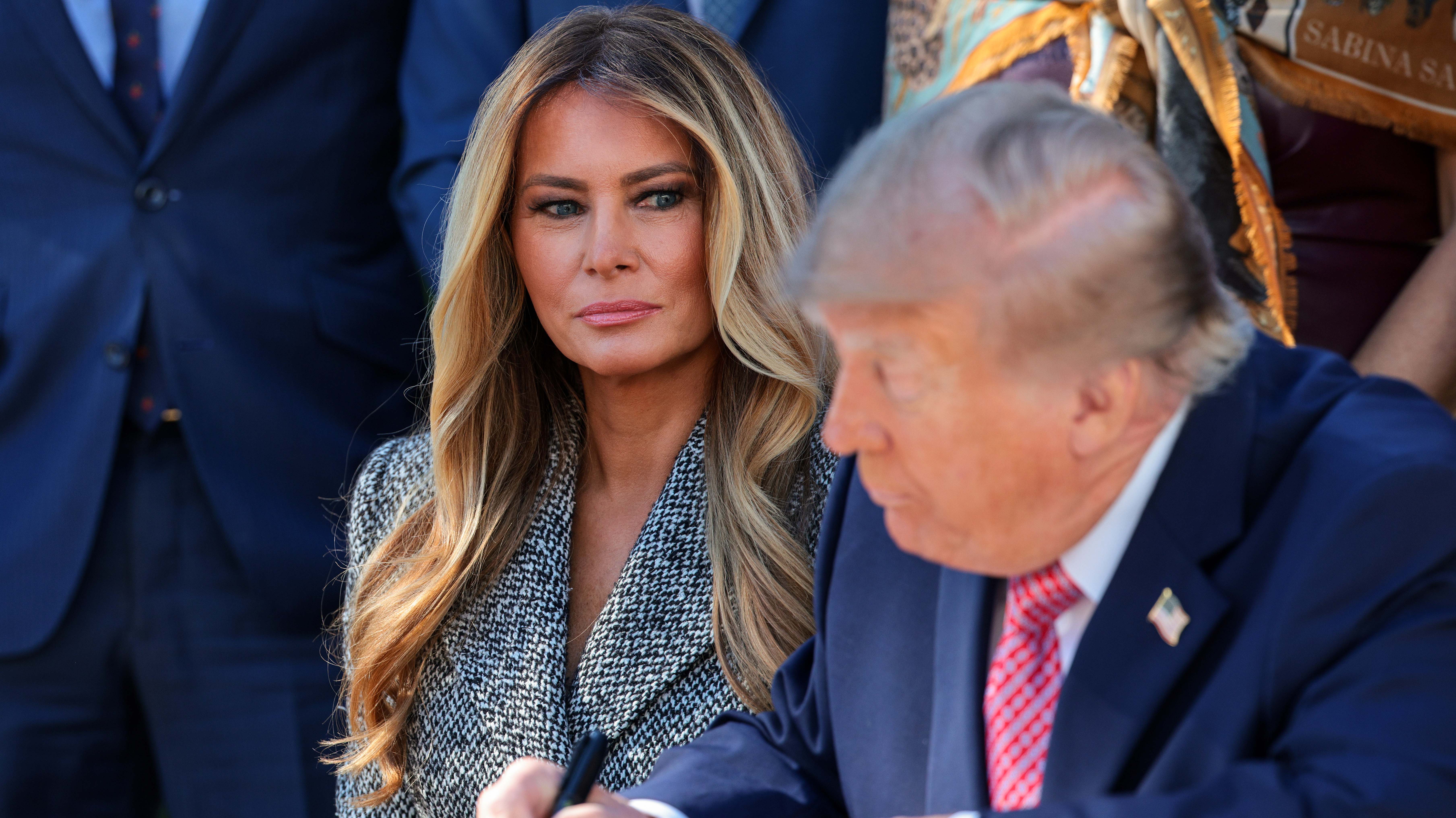
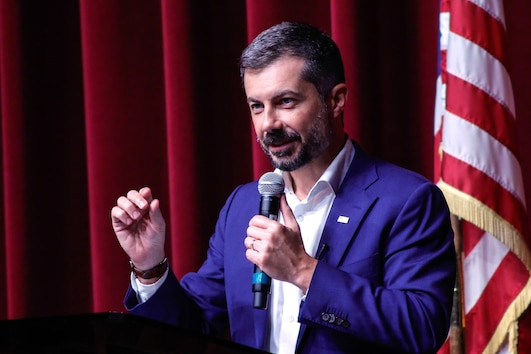
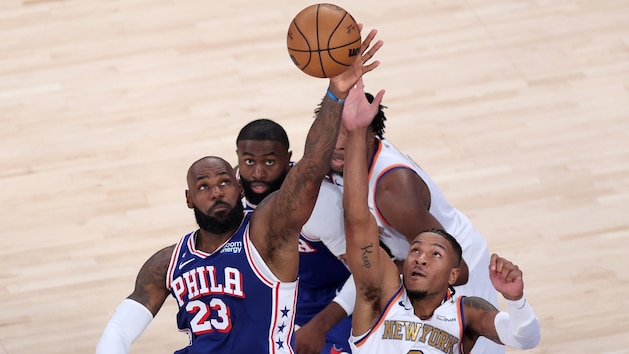
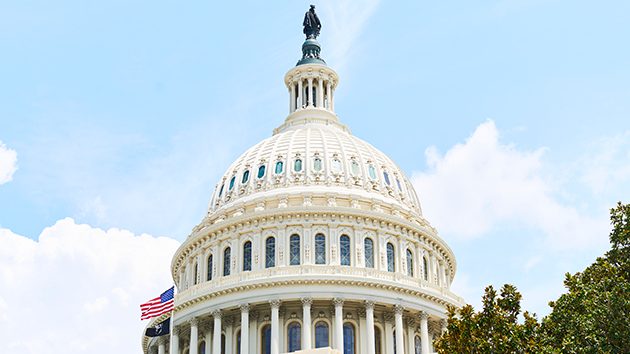
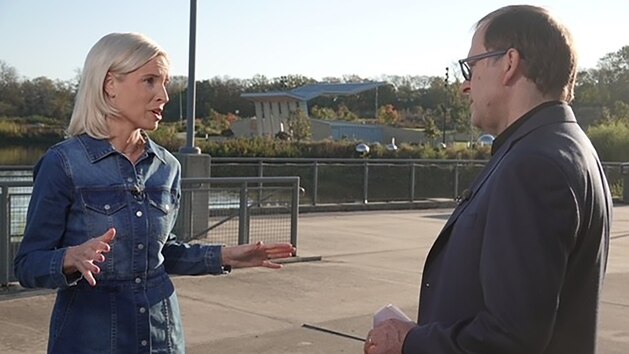
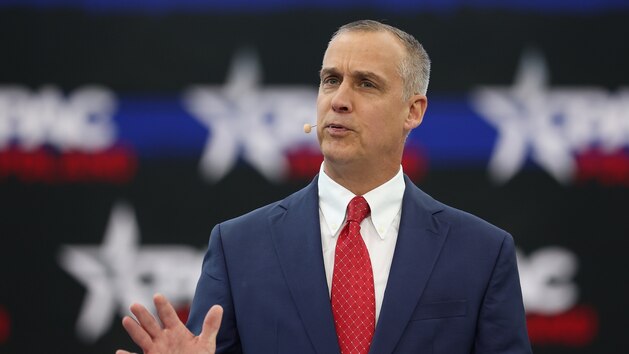
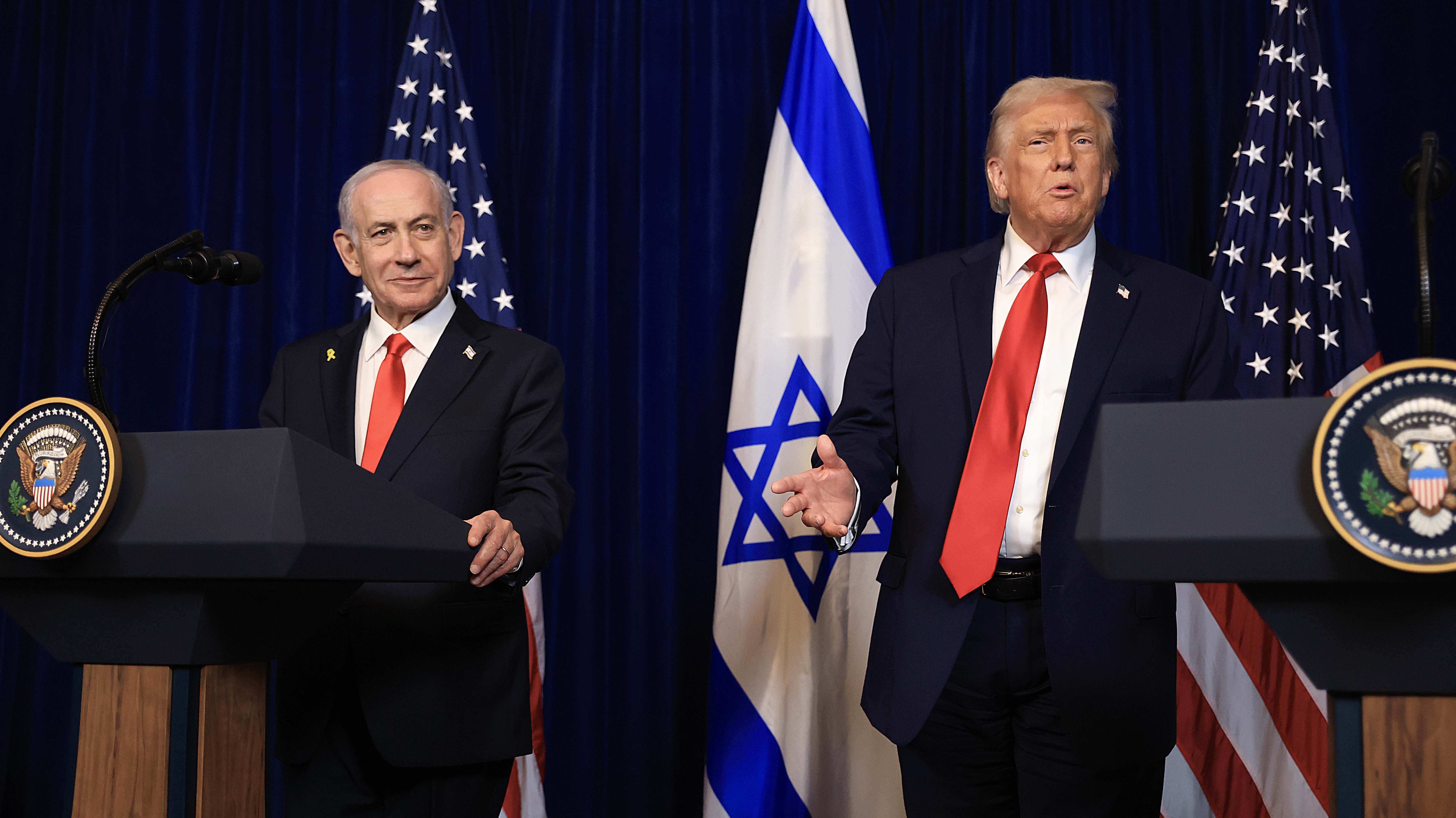
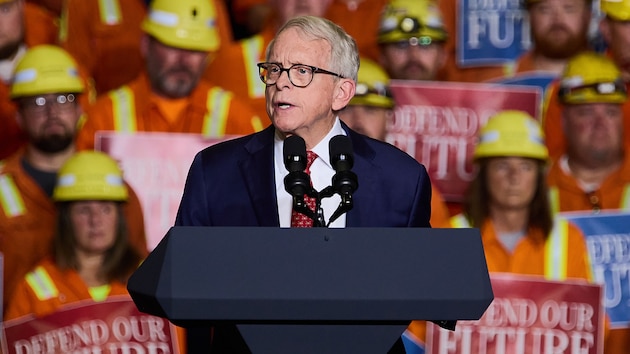
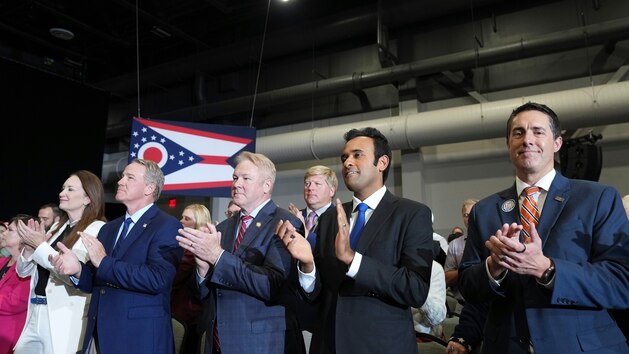
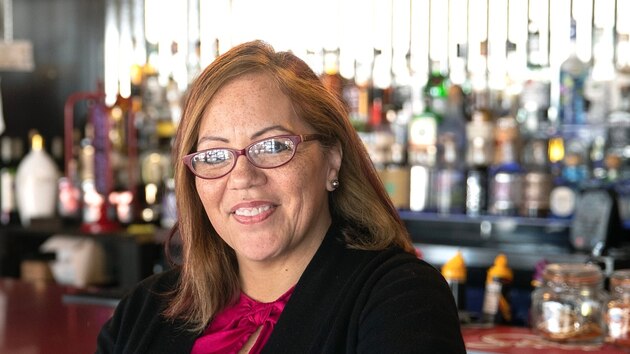
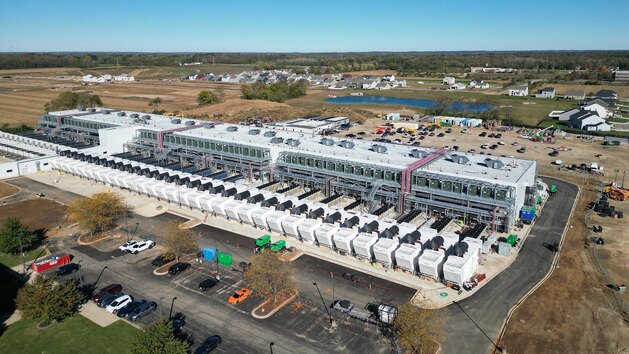
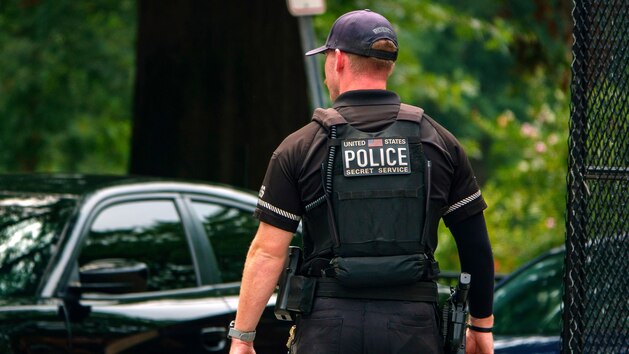
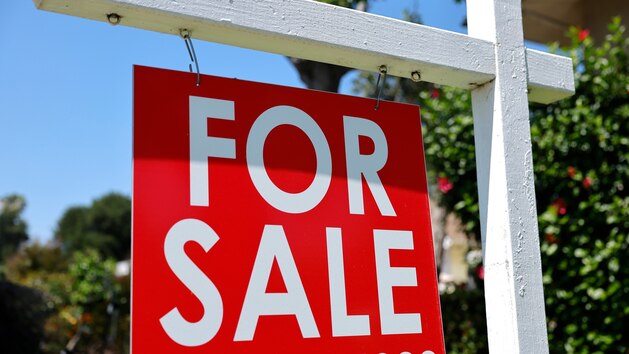
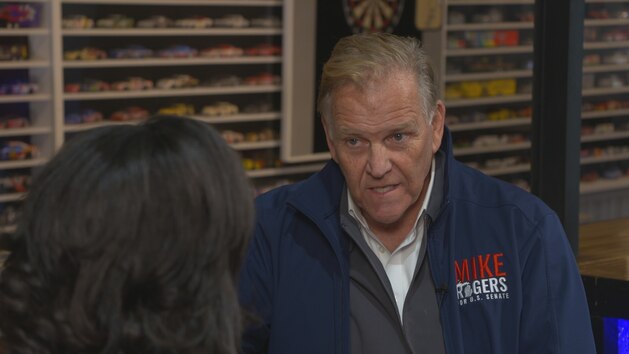
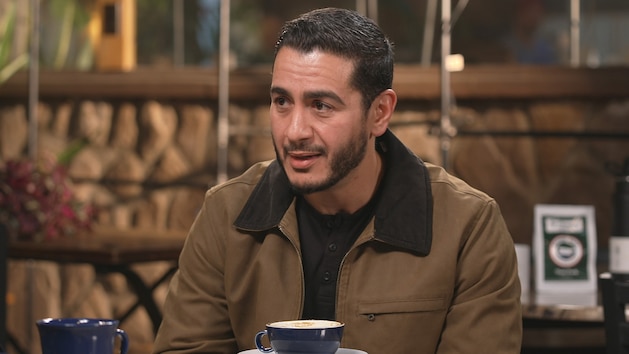
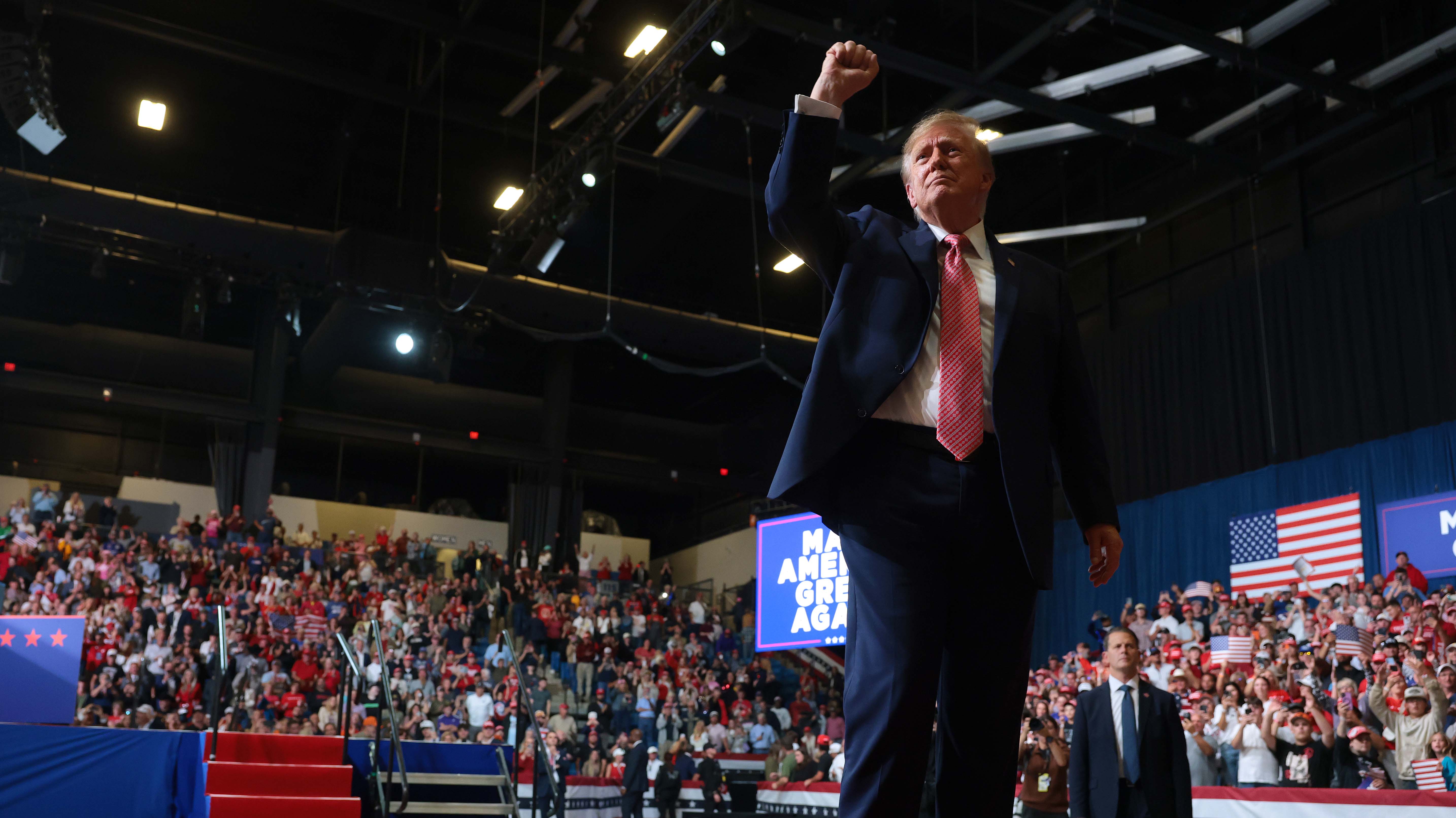
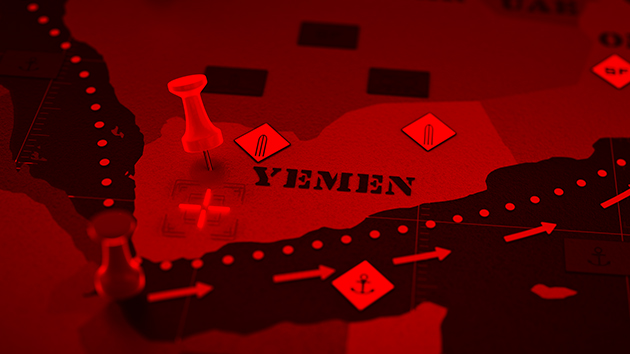

.jpg)

